


- Home
- Fire & Life Safety
Life-Saving Fire & Smoke Alarm Installation in Lanarkshire
Advanced Detection, Scottish Compliance, and Total Peace of Mind
Of all the systems installed in a property, none are as critical as those designed to protect life. While a security system protects your possessions, a properly designed fire detection system protects your family, your employees, and the structure of the building itself.
- SSAIB-aligned installs
- Fully insured
- Local Lanarkshire engineers
- 5★ rated
For many property owners, fire safety is a source of confusion, particularly given the recent changes in Scottish legislation. We are here to bring clarity and certainty. We move beyond the basic, standalone battery alarms of the past to provide fully integrated, interlinked solutions that ensure if a fire is detected in the kitchen, the alarm sounds in the bedrooms instantly.
Our approach is one of uncompromising safety and professional compliance. We do not cut corners with life safety systems. Whether you are a homeowner bringing your property up to the new legislative standards, a landlord responsible for tenant safety, or a business owner meeting your Fire Risk Assessment obligations, we provide authoritative advice and robust installation services. We ensure that your property is not just “ticking a box,” but is genuinely protected by reliable technology that works when you need it most.
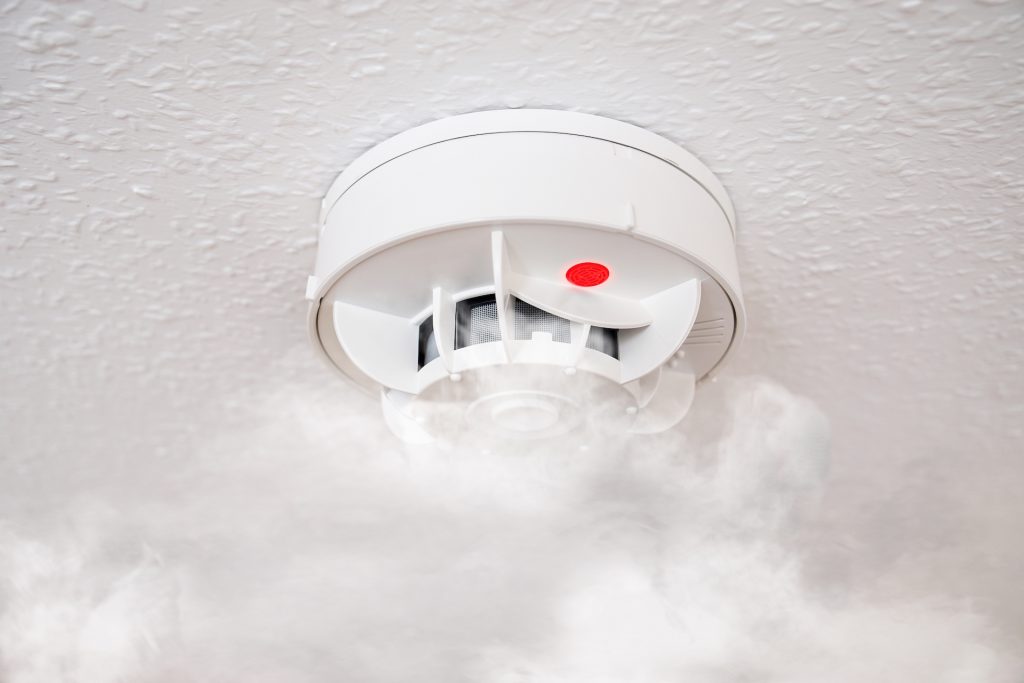
Why Professional Fire Alarms Matter
Beyond the Battery: The Importance of Professional Life Safety Systems
It is a common misconception that sticking a battery-powered alarm on the hallway ceiling is sufficient protection. While any alarm is better than no alarm, professional systems offer a significantly higher tier of safety, reliability, and coverage. In Scotland, the standards for fire detection are among the highest in the UK, and meeting them requires professional expertise.
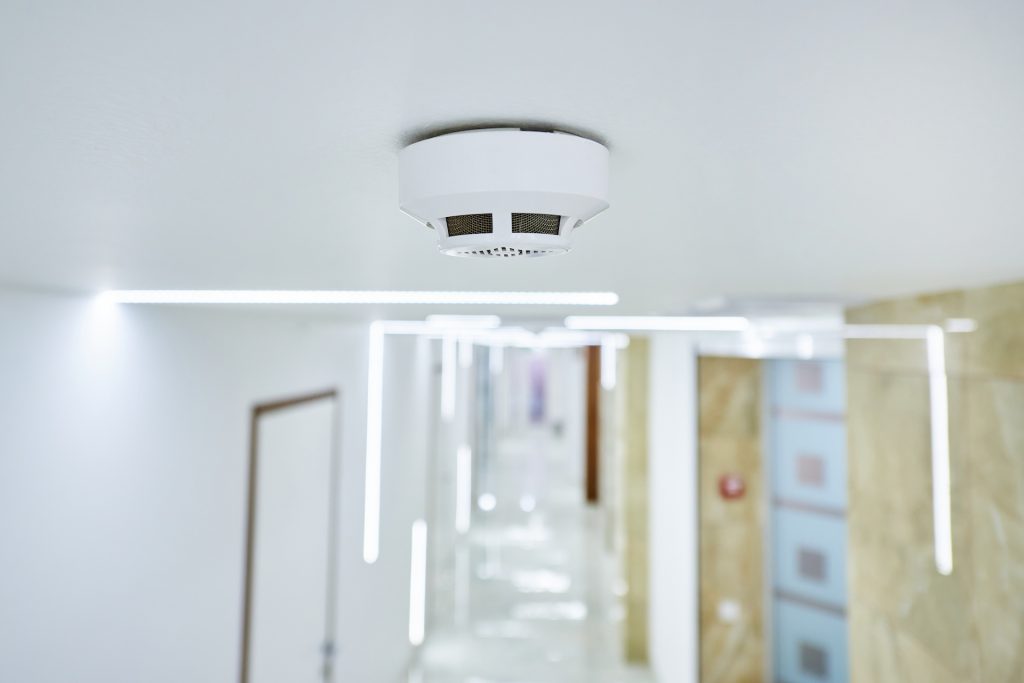
Interlinking: The Vital Safety Feature
The single most important feature of a modern professional system is "interlinking." In a standard setup, if a fire starts in the living room downstairs, a standalone alarm in the upstairs bedroom may not detect the smoke until it is too late, or the sound may be muffled by closed doors.
Correct Sensor Selection & False Alarm Reduction
We have all experienced the frustration of an alarm going off because of burnt toast. This usually happens because the wrong type of sensor has been installed in the wrong place. A professional installation involves selecting the correct technology for each room.
Reliability & Power Redundancy
Professional systems are typically mains-powered via your property’s electrical circuit, backed up by a tamper-proof lithium battery. This "Grade D" standard ensures that the system is always on, even if the battery fails or the mains power is cut during a fire.
Types of Fire & Smoke Alarm Systems
Tailored Solutions: Domestic, Commercial, and Wireless
Fire safety is not a generic product; it is a designed solution based on the specific layout and usage of your building. We offer a range of system types to suit everything from a two-bedroom flat to a large industrial warehouse.
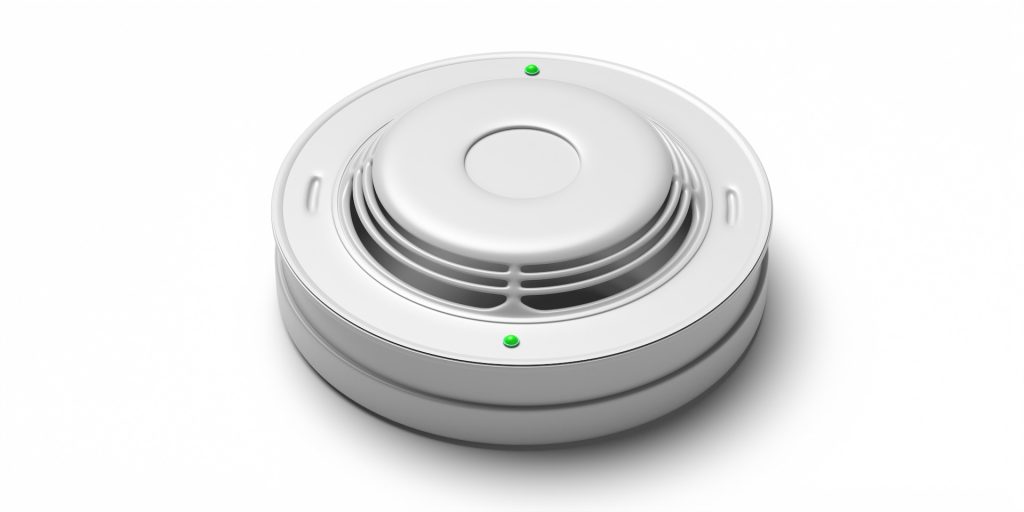
Domestic Mains-Interlinked Systems (Grade D1/D2)
This is the new standard for all Scottish homes. These systems are hardwired into your home’s electricity supply.
Best For
Typically involves a Smoke Alarm in the living room, a Smoke Alarm in every hallway/landing, and a Heat Alarm in the kitchen.
Advantages
- We also integrate Carbon Monoxide (CO)
- Detectors into this system where fossil fuel appliances
- Creating a comprehensive safety net.
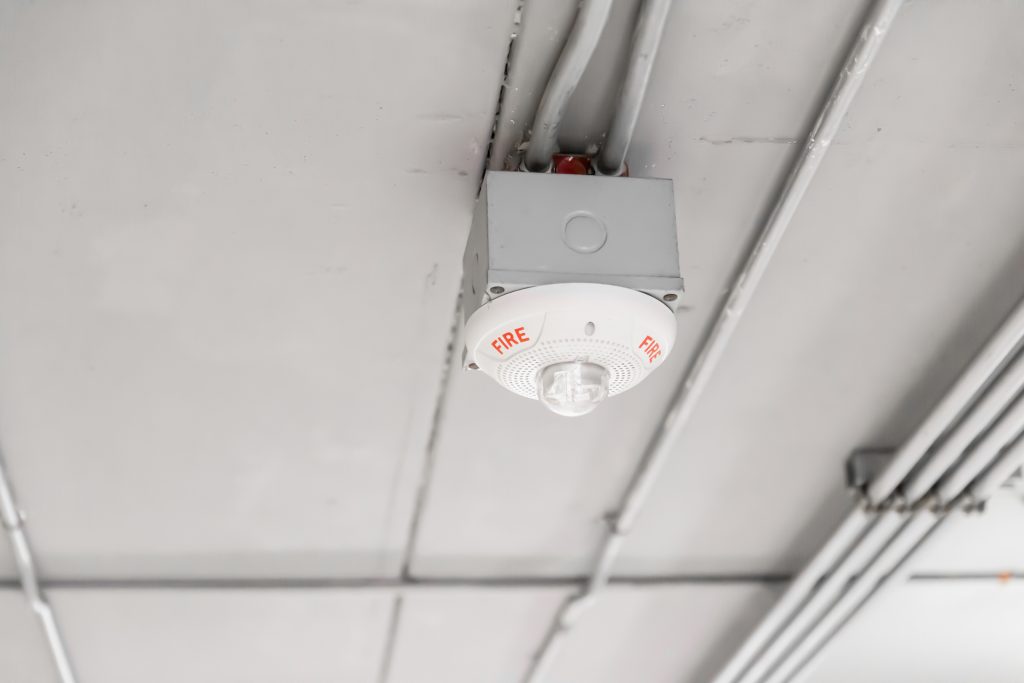
Wireless Interlinked Systems
For finished properties where lifting floorboards or chasing walls to run cables is not desirable, we install professional Radio Frequency (RF) systems.
Best For
Heritage properties, freshly decorated homes, or buildings with concrete ceilings.
Advantages
- These units contain a sealed 10-year lithium battery and communicate wirelessly.
- They offer the same level of interlinked protection and compliance as hardwired systems
- Installed in a matter of hours with zero dust, mess, or redecorating required.
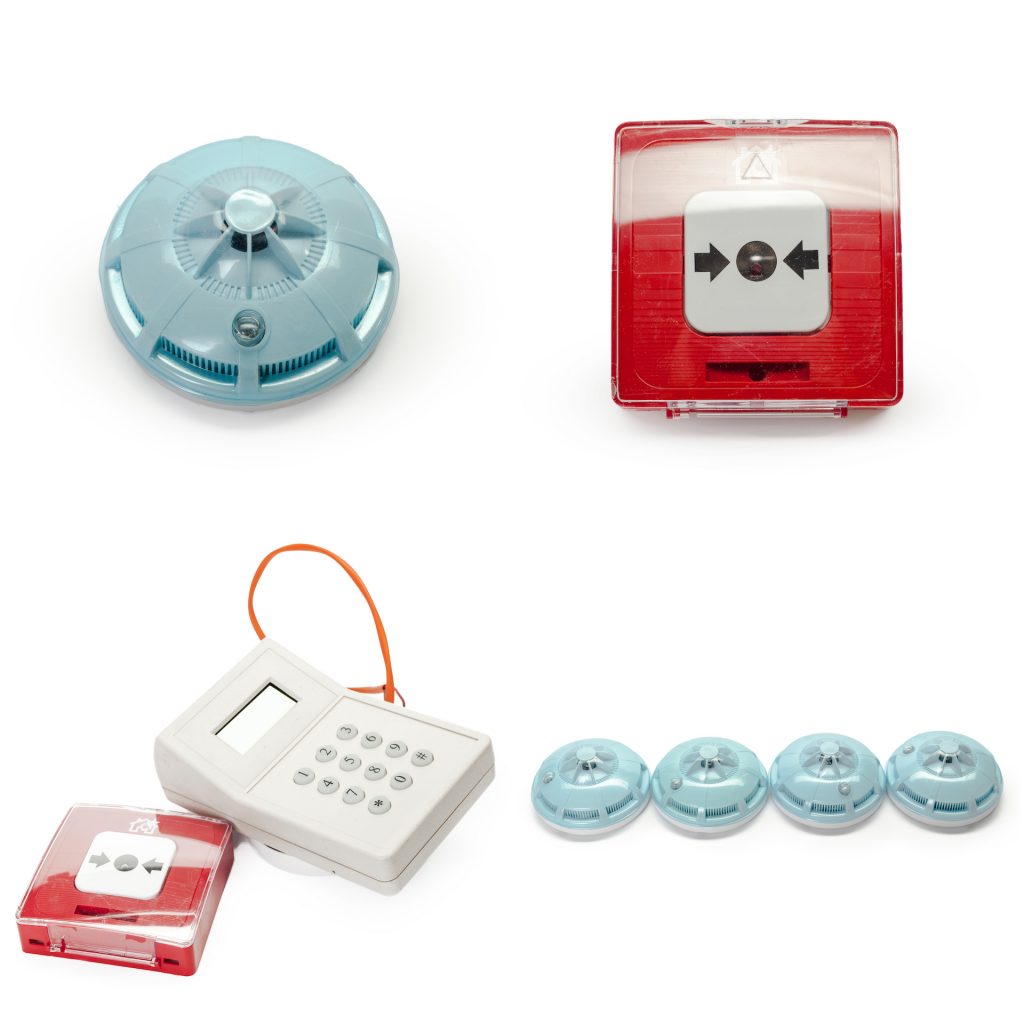
Commercial Conventional & Addressable Panels
For businesses, guest houses, and HMOs (Houses in Multiple Occupation), a simple smoke alarm is often insufficient. We install central Fire Alarm Panels.
Best For
Ideal for smaller shops or offices. The building is divided into “zones.” If a detector triggers, the panel tells you which zone (e.g., “Zone 1 – Ground Floor”) is in alarm.
Advantages
- Essential for larger buildings.
- Each detector has a unique electronic address.
- Allowing for rapid investigation and evacuation.
Installation Process
A Seamless Journey from Survey to Handover
We pride ourselves on a clean, efficient, and professional installation journey. We understand that installing fire alarms often involves working in private spaces like bedrooms, and we treat your property with the utmost respect.
The Compliance Survey
We visit your property in Lanarkshire to assess your specific needs. For homeowners, we check the layout to determine the correct number of alarms to meet the Scottish Tolerable Standard. For businesses, we review your Fire Risk Assessment to ensure the proposed system meets the required Category (e.g., L1, L2, or L3).
System Design & Proposal
We design a compliant Fire & Smoke Alarm solution. We specify the correct sensor types—Opticals for hallways to prevent false alarms from steam, and Heat detectors for kitchens. We provide a transparent, fixed-cost quotation.
Professional Installation
Our engineers arrive to install the system. For mains-wired systems, we route cabling discreetly, often using loft spaces to minimise trunking. For wireless systems, the process is incredibly fast. We mount the bases securely to the ceiling, ensuring they are positioned correctly (away from light fittings and wall corners) to ensure proper airflow and detection.
Decibel Testing & Commissioning
Once installed, we don't just hope it works; we prove it. We test the sound pressure levels (decibels) to ensure the alarm is loud enough (typically 85dB at the bedroom door) to wake sleeping occupants. We test the interlink function to ensure that triggering one unit triggers them all.
Handover & Certification
We provide a full handover. We show you how to test the system (which should be done weekly), how to silence a false alarm, and how to identify a low-battery warning. Crucially, we issue the relevant Installation Certificate (BS 5839-6 for homes or BS 5839-1 for businesses), which is your proof of compliance for insurance and legal purposes.
Compliance & Legislation (Scottish Law)
Meeting BS 5839 and the New Scottish Tolerable Standard
Navigating fire safety legislation can be daunting. As of February 2022, the law in Scotland changed significantly, placing stricter requirements on every single homeowner—not just landlords. As local specialists, we ensure your property is fully compliant with these rigorous standards.
The "New" Standard for All Homes
Every home in Scotland must now meet the “Tolerable Standard.” This legally requires:
One smoke alarm in the living room (or the room you use most).
One smoke alarm in every hallway or landing on every storey.
One heat alarm in the kitchen.
All alarms must be interlinked (ceiling-mounted).
Carbon monoxide detectors must be fitted where there is a carbon-fuelled appliance.
If your home does not meet this standard, your home insurance may be invalid, and you may face difficulties when trying to sell the property. We provide a “Compliance Certification” upon completion of our work, proving that your system meets these legal requirements.
Commercial Compliance (BS 5839-1)
For businesses, the “Fire (Scotland) Act 2005” requires a designated “Responsible Person” to ensure the safety of the premises. This includes having a valid Fire Risk Assessment and a functional, maintained fire detection system. We design commercial systems to meet British Standard BS 5839-1, covering categories from L1 (protection of life – maximum coverage) to M (manual call points only), ensuring you meet your legal and insurance obligations.
FAQ
Frequently Asked Questions
Find answers to frequently asked questions about our Fire & Life Safety installation and maintenance services.
The industry standard lifespan for fire alarm sensors is 10 years. After this time, the sensors inside the unit degrade and may become unreliable or overly sensitive. If your alarms are yellowing or older than 10 years, they should be replaced immediately. All the systems we install come with a 10-year lifespan guarantee.
An intermittent "chirp" or beep (usually once a minute) typically indicates a fault or a low battery. If it is a mains-powered unit, it may mean the backup battery is failing, or the sensing chamber is contaminated with dust. We recommend vacuuming your alarms regularly to keep them clean. If the beeping persists, call us for a service check.
Yes. Under current Scottish legislation, a smoke alarm in the "most used room" (usually the living room) is a legal requirement. This is because many residential fires start here due to electrical equipment (TVs, chargers) or open fires/candles.
We strive to keep disruption to an absolute minimum. If you opt for a wireless interlinked system, there is zero mess as no cables need to be run. For mains-wired systems, we use dust sheets and vacuum up any plaster dust immediately. We aim to leave your home exactly as tidy as we found it
Not necessarily. Very small premises with an open-plan layout may be permitted to use a Grade D (mains interlinked) system similar to a house, depending on your Fire Risk Assessment. However, if you have complex layouts, high occupancy, or sleeping risks, a control panel system is usually required. We can advise you based on your specific premises.
If your alarm triggers every time you use the toaster, you likely have the wrong type of sensor (a smoke detector) or it is positioned too close to the cooker. We solve this by installing a Heat Alarm in the kitchen. Heat alarms only trigger when the room temperature rises rapidly (usually above 58°C), meaning they ignore burnt toast and steam completely, solving the false alarm problem.
Industry best practice recommends that an audible-only alarm be serviced once a year. If your system is monitored (connected to a police response or keyholder service), it typically requires two inspections per year. Regular maintenance ensures sensors are clean, batteries are charged, and the system remains fully operational.